Every Strain Has Its Own Sweet Spot — Here's How to Find Yours
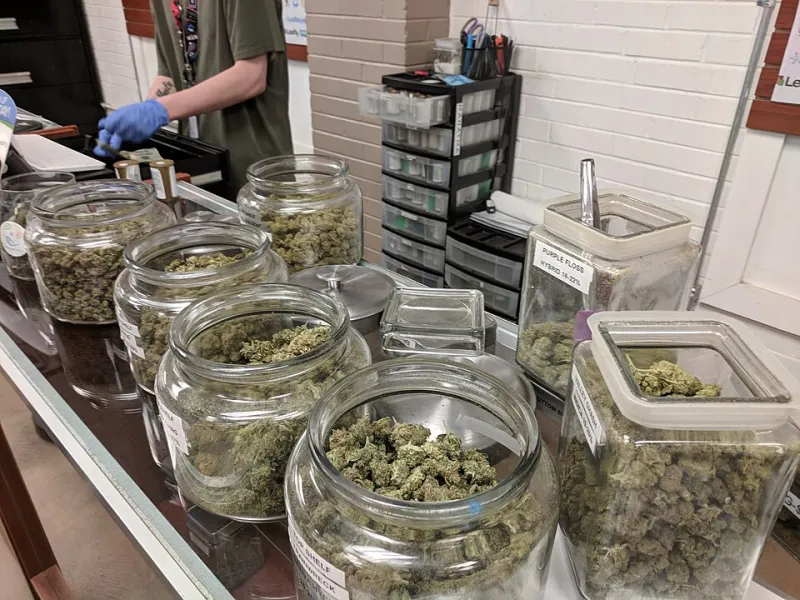
Photo: My 420 Tours, CC BY-SA 4.0, via Wikimedia Commons
If you've ever swapped strains without touching your temperature dial and wondered why the experience felt totally off — flatter, harsher, or just weirdly different — you weren't imagining it. Cannabis isn't a monolith, and neither is the heat it needs. The idea that one preset temperature can serve every cultivar you run through your device is one of the most persistent myths in vaping culture, and it's worth unpacking.
Why Genetics Set the Stage
Every cannabis plant carries a unique chemical blueprint. Decades of selective breeding in the US market have produced cultivars with wildly different cannabinoid ratios and terpene concentrations. A high-myrcene indica-leaning strain like a classic OG Kush is chemically a different animal from a limonene-forward sativa hybrid like a Durban Poison cross. They don't just smell and feel different — they literally vaporize differently.
The core issue is that cannabinoids and terpenes each have distinct boiling points. THC converts to vapor at around 315°F, while CBD requires slightly more heat, closer to 320–356°F. CBN, which tends to accumulate in older or oxidized flower, boils even higher. If your chamber is loaded with a CBD-rich cultivar and you're running at 365°F thinking you're being conservative, you might actually be scorching your terpenes before they have a chance to express themselves.
Terpenes Are the Wild Card
Here's where things get genuinely interesting — and where most vaping guides fall short. Terpenes don't just provide aroma. They actively modulate how cannabinoids interact with your endocannabinoid system, a relationship researchers sometimes call the entourage effect. But terpenes are also remarkably volatile, meaning they burn off fast at higher temperatures.
Myrcene, one of the most common terpenes in cannabis, has a boiling point of around 334°F. Linalool, associated with that calming lavender-like quality in some strains, vaporizes closer to 388°F. Pinene, which shows up heavily in strains like Jack Herer, converts at roughly 311°F — meaning it's practically gone before you even get to THC territory if you're not paying attention.
The practical takeaway? A strain's terpene profile should directly influence your starting temperature. Terpene-rich, aromatic cultivars — think anything that practically jumps out of the jar when you open it — generally reward a lower-temperature approach. You'll sacrifice some cannabinoid vapor density, but the flavor complexity and nuanced effects are worth it.
The Low-and-Slow vs. High-Heat Tradeoff
Let's talk about what actually changes across the temperature spectrum, because the tradeoffs are real and they matter depending on what you're after.
Low heat (315–350°F): This range is where terpenes shine. You'll get lighter, more flavorful vapor with a gentler, often more cerebral effect. It's ideal for strains you chose specifically for their smell and taste — anything with a complex nose deserves this treatment. The downside is efficiency; you're leaving some cannabinoids behind.
Mid-range heat (350–390°F): This is where most people land by default, and for good reason. You're hitting the sweet spot for THC and many secondary cannabinoids while still preserving some terpene character. It's a solid starting point for most indica-leaning cultivars and balanced hybrids.
High heat (390–430°F): You're after potency and full extraction here. CBD, CBN, and higher-boiling terpenes like linalool come online in this range. It's worth exploring with CBD-dominant strains or older flower that needs more coaxing. The vapor gets denser and the flavor more muted, but the effect ceiling is higher.
Reading Your Strain Before You Load
So how do you actually apply this? A few practical habits make a real difference.
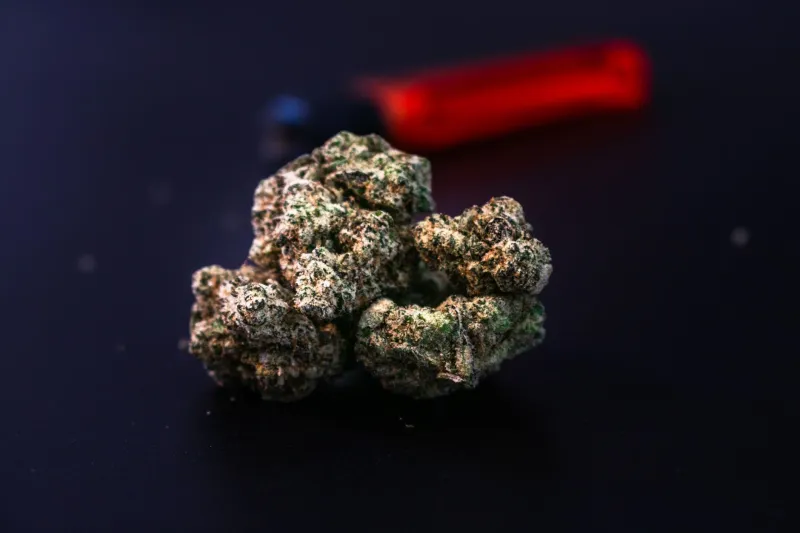
First, smell your flower before it goes in the chamber. An intensely aromatic cultivar is signaling high terpene content — treat it accordingly and start low. A denser, less fragrant nug might benefit from more heat to fully activate its cannabinoid load.
Second, check your dispensary's lab data when it's available. Many US retailers now post full terpene panels alongside cannabinoid percentages. If your strain shows high myrcene and low everything else, you already know to start around 330–345°F. If it's linalool-forward, nudging toward 380°F makes more sense.
Third, do a two-pass approach with strains you're unfamiliar with. Start a session at a lower temperature to capture the aromatic terpene fraction, then bump the heat for a second pass to extract residual cannabinoids. You'll waste less and learn more about how that specific cultivar behaves.
Why Presets Are Holding You Back
Many popular portable vaporizers ship with three or four preset temperatures, and while that's fine as a starting point, it's not a complete strategy. The convenience of a single button press can quietly flatten the experience of genuinely interesting cultivars.
Devices with precise degree-by-degree adjustment — whether through an app, a digital display, or a rotating dial — give you a real advantage here. Brands like Storz & Bickel, Arizer, and Davinci have built reputations partly on the strength of their temperature precision, and that precision pays off most noticeably when you're working with complex, terpene-heavy flower.
The bottom line: your vaporizer is a tool, and like any good tool, it works best when you use it with some intention. Every strain you pick up is a small puzzle, and temperature is one of the most powerful variables you control. Start lower than you think you need to, pay attention to what you taste in the first few draws, and adjust from there. The sweet spot is real — it just moves around a little depending on what's in your grinder.