Mile High, Half the Vapor: What Altitude Actually Does to Your Vaporizer (And How to Fix It)
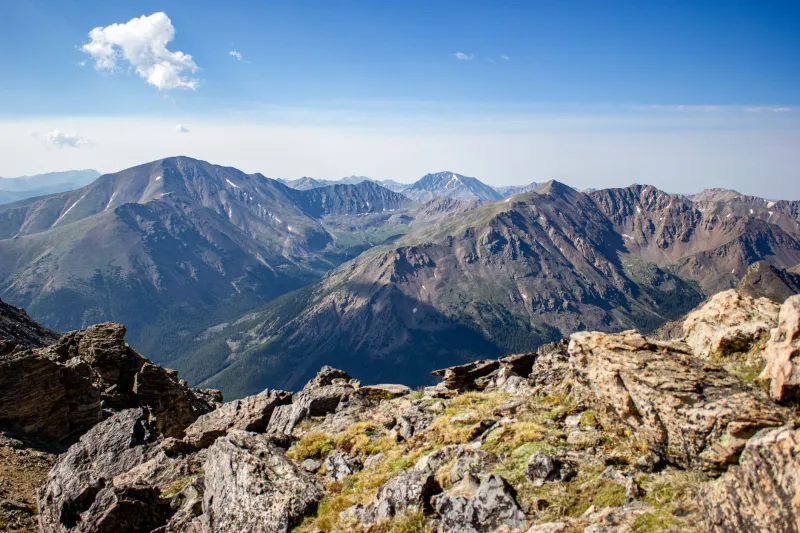
You land in Denver, check into your Airbnb, and pull out the vaporizer you've been dialing in for months. Same herb, same grind, same temperature setting you've used a hundred times at home. But something's different. The draws feel thinner. The flavor seems muted. You're pulling harder and getting less back. What gives?
Welcome to the vapor ceiling — the point at which altitude stops being just a backdrop and starts actively messing with your session.
The Invisible Variable Nobody Talks About
Most vaporizer guides assume you're using your device at or near sea level. Product testing, temperature calibration, and airflow engineering all happen in controlled environments that don't account for what happens when you take that same device to Santa Fe, Flagstaff, or a cabin somewhere in the Rockies.
The core issue is atmospheric pressure. At sea level, air pressure sits around 14.7 psi. By the time you climb to Denver's 5,280 feet, that drops to roughly 12.2 psi. At 10,000 feet — think ski towns like Breckenridge or Telluride — you're looking at closer to 10.1 psi. Less pressure means fewer air molecules in any given volume of air, and that has cascading effects on how your vaporizer actually functions.
How Pressure Changes the Boiling Point (Yes, Really)
Here's where it gets genuinely interesting. The temperature at which compounds vaporize isn't fixed — it shifts based on surrounding pressure. At lower atmospheric pressure, substances boil and vaporize at lower temperatures. Water boils at 212°F at sea level but only around 194°F in Denver. The same principle applies to cannabinoids and terpenes.
That means the 375°F you've dialed in for a terpene-rich, flavorful session at home is behaving differently at altitude. Your device is technically hitting that temperature, but the pressure environment means compounds are vaporizing faster and at lower thresholds than your device was calibrated to expect. The result can be quicker terpene burnoff, harsher draws, and a session that feels front-loaded and then flat.
On the flip side, some vapers at altitude report their sessions feel underpowered even at temperatures that normally produce dense clouds. This is partly because thinner air carries less vapor per draw — you're getting the same concentration of compounds, but physically less air volume means each inhale delivers a lighter hit.
The Airflow Problem
Beyond chemistry, there's a mechanical issue at play. Vaporizers are designed with specific airflow resistance in mind. Convection devices especially rely on air moving through a heated chamber at a predictable rate. At altitude, thinner air means reduced airflow resistance, which can cause air to move through the chamber faster than intended. That changes the dwell time — how long air spends in contact with your herb — and can result in uneven heating and inconsistent vapor production.
Conduction vaporizers are somewhat less sensitive to this effect since they rely on direct contact heat rather than hot air passing through the material. But they're not immune. Battery efficiency, heat retention, and draw dynamics all shift in low-pressure environments regardless of heating style.
What Vapers in High-Altitude Cities Are Actually Experiencing
Denver and Boulder get most of the attention, but Albuquerque sits at 5,312 feet — slightly higher than Denver. Salt Lake City clocks in around 4,300 feet. Flagstaff, Arizona is above 6,900 feet. These aren't remote mountain outposts; they're major metros with significant cannabis consumer populations, and the altitude factor is a real, lived part of their vaping experience.
Anecdotally, vapers who relocate to these cities from coastal areas often go through a recalibration period lasting a few weeks as they figure out why their device feels different. The most common complaints: sessions that start strong and drop off quickly, unexpected harshness at temperatures that used to feel smooth, and battery life that seems shorter (more on that in a second).
Battery and Heating Element Considerations
Cold temperatures compound the altitude problem in mountain environments. Lithium-ion batteries lose capacity in the cold — a vaporizer left in a car or a jacket pocket in sub-freezing temps can see a 20–30% drop in effective battery output. That affects how consistently your heating element reaches and holds its target temperature. Your device might be reading 375°F while actually cycling lower because the battery can't sustain the draw.
If you're vaping outdoors at elevation in winter, keeping your device warm before and during use isn't just comfort advice — it's directly tied to session quality.
Practical Adjustments That Actually Help
So what can you actually do? A few things:
Drop your temperature slightly. Since compounds vaporize at lower thresholds at altitude, experiment with reducing your set temp by 10–15°F from your usual baseline. This can prevent terpene burnoff and extend the useful life of your bowl.
Slow your draw. Compensate for faster airflow by drawing more slowly and deliberately. This increases dwell time and gives your herb more contact with the heat source.
Pack slightly looser. Tighter packs restrict airflow even further in a low-pressure environment. A medium-loose grind and a lighter pack can help normalize the airflow dynamics your device was designed around.
Keep your device warm. Especially in cold mountain climates, let your vaporizer fully warm up before your first draw, and keep it insulated between sessions.
Hydrate more. This one's less about the device and more about you — altitude dehydration is real, and dry airways make vapor feel harsher than it actually is. Drinking more water helps.
The Bigger Picture
The vapor ceiling isn't a flaw in your device — it's physics doing what physics does. The vaporizer industry largely hasn't addressed altitude as a consumer variable, which means figuring this stuff out falls on you. But understanding why your sessions feel different at elevation puts you in a much better position to adapt.
For permanent residents of high-altitude cities, these adjustments become second nature pretty quickly. For travelers heading to mountain destinations, a little awareness before you pack your kit can save a lot of frustration once you arrive.
Your vaporizer didn't get worse. The air just got thinner. Work with it, and your sessions will follow.