Patchwork Nation: How State-by-State Cannabis Laws Are Quietly Changing What You Pay and What You Can Buy
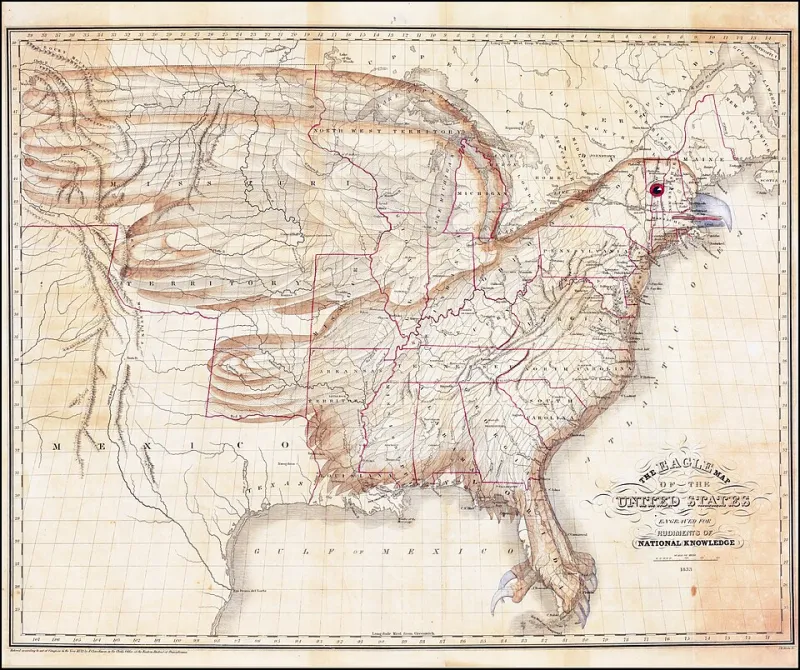
Photo: Isaac W. Moore (engraving) / Published by E. L. Carey & A. Hart, Philadelphia, Public domain, via Wikimedia Commons
If you've ever wondered why that same half-gram cartridge costs $28 in one state and $52 in another, you're not imagining things — and it's not just dispensary markup. The real culprit is a maze of state-level tax structures, licensing requirements, and product compliance mandates that have quietly turned the US vaporizer market into something resembling a quilt stitched together by 50 different tailors, none of whom are talking to each other.
For cannabis vapers specifically, these regulatory gaps hit harder than for flower consumers. Vape hardware and concentrate products tend to face layered taxation — sometimes taxed as both a cannabis product and a vaping device — and the compliance burden on manufacturers is steep enough that some brands have simply stopped shipping to certain states altogether.
The Tax Layer Cake Problem
Most legal cannabis states apply an excise tax on top of standard sales tax, and those rates vary dramatically. California stacks a 15% cannabis excise tax alongside local municipal taxes that can push the effective rate past 35% in cities like Los Angeles. Illinois, meanwhile, applies a tiered tax based on THC potency — meaning high-concentration vape cartridges get taxed at a higher rate than lower-potency flower products. For vapers who prefer full-extract oils or live resin carts, that potency-based penalty hits directly in the wallet.
Colorado and Oregon sit on the more consumer-friendly end of the spectrum. Colorado's flat 15% excise tax is predictable and doesn't discriminate by product format, which has helped keep vape prices relatively stable there. Oregon's structure is similarly straightforward, and the state's competitive retail market keeps margins thin — a win for consumers.
Then there's the vape-specific tax issue. Several states — including Pennsylvania and Minnesota — have separate excise taxes on vaping products that were originally designed to target nicotine e-cigarettes. Cannabis vape hardware sometimes gets swept into these frameworks depending on how a state's revenue department interprets the rules, creating double-taxation scenarios that are confusing for retailers and maddening for consumers.
Licensing Bottlenecks and the Shelf Gap
Taxes are only half the story. Licensing requirements for cannabis vaporizer manufacturers and distributors vary so much that some brands operate in only a handful of states simply because the compliance cost of entering more markets isn't worth it — yet.
In states like New York, which launched adult-use sales relatively recently, licensing backlogs have created product shortages that pushed prices up and limited consumer choice during the rollout period. Meanwhile, established markets like Nevada have streamlined their licensing processes enough that the product selection in a Las Vegas dispensary is genuinely impressive — dozens of vape cartridge brands, hardware options from multiple manufacturers, and competitive pricing that reflects a mature market.
For smaller or mid-size vape brands, this fragmentation is existential. Reformulating a cartridge to meet California's Proposition 65 warning requirements, redesigning packaging for Massachusetts' strict child-resistant standards, and navigating Michigan's testing protocols are each their own expensive projects. Do that across 24 legal states and you're looking at compliance overhead that only the best-capitalized companies can absorb.
What Manufacturers Are Quietly Changing — and Why You Should Care
Here's the part that affects vapers most directly: compliance pressure is driving product changes that consumers often don't hear about until after the fact.
Some manufacturers have quietly reformulated their oil blends to reduce potency in states with tiered THC taxes — keeping the product in a lower tax bracket while maintaining similar pricing. Others have switched hardware suppliers to source components that meet specific state testing standards, sometimes affecting the vapor quality or draw resistance in the process. A cart that performs beautifully in one state may be a slightly different product in another, even if it carries the same brand name.
Flavored vape cartridges have also come under fire in several states. Massachusetts has restricted flavored cannabis vaping products, and similar proposals have circulated in other legislatures. If you're someone who specifically seeks out terpene-forward or flavored oil products, it's worth keeping an eye on your state's regulatory calendar — what's on shelves today may not be there next year.
The States to Watch in 2025 and Beyond
A few regulatory shifts on the horizon are worth tracking closely.
Minnesota launched adult-use sales in 2025 and is still sorting out its retail framework. Early indications suggest a relatively progressive product policy, but the state's existing vape tax infrastructure creates some uncertainty around hardware pricing.
Florida passed Amendment 3 in 2024 to legalize adult-use cannabis, and the regulatory rulemaking process is now underway. Given Florida's massive population and existing medical market infrastructure, how the state structures its vape product rules will have outsized national significance — both for consumers and for manufacturers deciding where to invest.
Federal rescheduling discussions remain the wild card. If cannabis moves to Schedule III under the Controlled Substances Act, it could open the door to interstate commerce — which would fundamentally disrupt the current state-by-state fragmentation. Whether that's imminent or years away is still anyone's guess, but it's the single regulatory development most likely to reshape everything.
What You Can Do Right Now
Until the regulatory picture simplifies — and it will eventually, even if slowly — there are a few practical moves that help you navigate the current landscape as a consumer.
First, know your state's tax structure. Most state revenue departments publish their cannabis tax rates publicly, and understanding why you're paying what you're paying is genuinely useful context. Second, follow your favorite brands on social media or sign up for their newsletters — when a product changes or gets discontinued in your state due to compliance issues, brands typically communicate that through those channels first. Third, if you're near a state border and prices are dramatically different across state lines, just know that transporting cannabis products across state lines remains federally illegal regardless of both states' legal status — so that's a line worth not crossing.
The vaporizer market in America is genuinely world-class in terms of product innovation and quality. The regulatory scaffolding around it is, to put it charitably, a work in progress. Staying informed is the best tool vapers have right now.