Terpenes on the Table: Does Your Vaporizer Actually Deliver the Full Cannabis Experience?
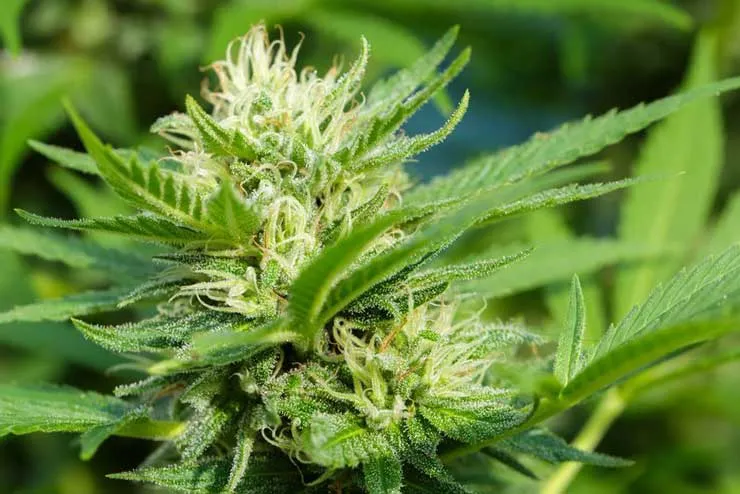
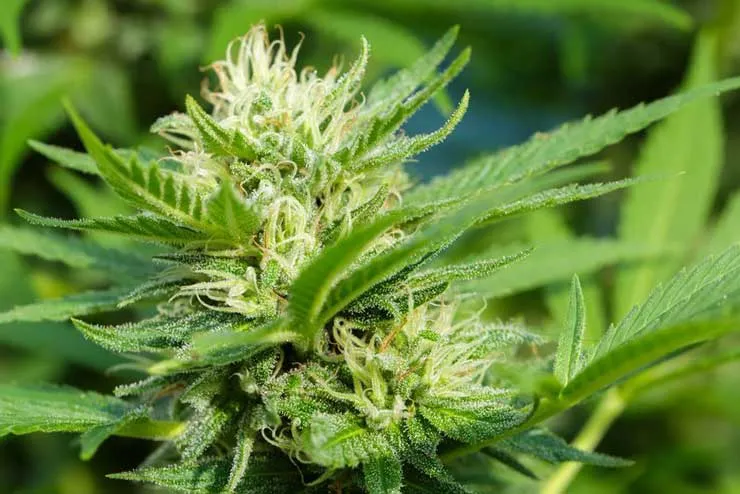
Photo: cannabis terpene molecules close-up vaporizer temperature science, via dist.cannigma.com
Walk into any dispensary in California, Colorado, or Massachusetts these days and you'll hear the word "terpenes" thrown around like it's common knowledge. Budtenders talk about myrcene's sedating qualities, limonene's uplifting character, and caryophyllene's anti-inflammatory potential with the confidence of aromatherapists. Brands compete on terpene percentages printed right on the label.
But here's where it gets interesting — and a little complicated. All those terpenes your dispensary is so proud of? They're extraordinarily volatile. They begin evaporating at relatively low temperatures, they're chemically sensitive, and they can be partially or entirely destroyed by the wrong conditions. Which raises a genuinely important question for anyone who vaporizes: how much of that carefully cultivated terpene profile is actually surviving the journey from your chamber to your lungs?
The answer, it turns out, depends enormously on your device and how you use it.
What the Entourage Effect Actually Means
The entourage effect is the working hypothesis — increasingly supported by emerging research — that cannabis compounds produce richer, more nuanced effects when consumed together rather than in isolation. The concept was first formally articulated by Israeli researchers Raphael Mechoulam and Shimon Ben-Shabat in the late 1990s and has since become foundational to how serious cannabis consumers think about product selection.
The idea isn't just about THC and CBD interacting (though that's part of it). It's about the dozens of terpenes and minor cannabinoids — CBG, CBN, THCV, and others — all influencing each other's effects and your body's endocannabinoid system in ways that a single isolated compound simply can't replicate. A high-THC distillate with no terpenes hits differently than a full-spectrum flower with the same THC percentage. Ask anyone who's made the comparison.
For vaporizer users, this means the device you choose and the temperature you set aren't just about vapor production — they're directly shaping which compounds you actually consume.
The Temperature Problem
Here's the chemistry that makes this conversation complicated. Cannabis terpenes have boiling points that range from remarkably low to moderately high:
- Myrcene vaporizes around 334°F (168°C)
- Limonene around 349°F (176°C)
- Linalool around 388°F (198°C)
- Caryophyllene around 320°F (160°C)
- Pinene around 311°F (155°C)
THC, by comparison, vaporizes around 315°F (157°C), while CBD requires temperatures closer to 356°F (180°C).
The practical implication? Many terpenes begin to volatilize — and at higher temperatures, to degrade or combust — within a range that overlaps with typical vaporization temperatures. Run your device too cool and you might preserve the terpenes but under-extract your cannabinoids. Run it too hot and you'll get robust cannabinoid delivery but torch the more delicate aromatic compounds that contribute to the entourage effect.
This is precisely why the cannabis community's growing obsession with temperature control isn't just audiophile-level nerdery. It has real implications for the quality and character of your experience.
What Different Vaporizer Technologies Actually Do
Not all vaporizers interact with your cannabis the same way, and the differences matter for terpene preservation.
Conduction vaporizers heat material through direct contact with a hot surface. They're generally less expensive and heat up faster, but they're prone to uneven heating and can create localized hot spots that exceed the temperature you've set. This inconsistency can scorch terpenes on the parts of your material closest to the heating element while under-extracting the rest. Budget conduction devices are probably the worst performers for full-spectrum extraction.
Convection vaporizers pass heated air through the material rather than directly heating it. This produces more even, consistent extraction across the entire herb bed. High-end convection devices like the Storz & Bickel Volcano or the Arizer Extreme Q give users significantly more control over the actual temperature their material experiences, which translates to more predictable terpene preservation. Industry representatives from several premium brands have pointed to convection heating as a key differentiator precisely because of this terpene-retention advantage.
Hybrid heating systems — used in devices like the Mighty+ and Crafty+ — combine both approaches, attempting to get the fast heat-up of conduction with the even extraction of convection. These tend to perform well in practice for flavor-conscious users.
Low-temperature dabbing (for concentrate users) has developed its own culture around terpene preservation. The "cold start" method and terp-focused rigs operating in the 400–500°F range are specifically designed to capture the full flavor profile that high-temp combustion-style dabs destroy.
What the Research Is (Slowly) Telling Us
It's worth being honest here: the research on vaporization and terpene preservation is still catching up to the consumer conversation. Cannabis research has historically been hampered by federal scheduling in the US, and rigorous peer-reviewed studies on vapor composition across device types remain relatively scarce.
What we do have is suggestive. A frequently cited 2001 study by California NORML and MAPS found that vaporization produced vapor with significantly higher cannabinoid-to-byproduct ratios than combustion. More recent analytical chemistry work has examined vapor composition at different temperature settings, generally confirming that lower temperatures preserve more of the volatile terpene fraction while higher temperatures favor cannabinoid extraction but degrade terpenes.
Some researchers studying vapor composition have noted that even vaporization isn't a perfectly clean process — certain degradation products form at higher temperatures, and the ratio of desired compounds to unwanted byproducts shifts depending on device type and settings. The consensus emerging from this work is that precision temperature control in convection-dominant devices offers the closest approximation to full-spectrum extraction that current consumer technology can achieve.
So Which Devices Actually Deliver?
For consumers who genuinely care about the entourage effect — who buy high-terpene flower specifically because they want that full botanical experience — the device choice matters. Here's the practical takeaway:
If terpene flavor and full-spectrum effects are your priority, prioritize convection or hybrid heating devices with precise, reliable temperature control. Set your temperature in the 340–375°F range to capture the broadest spread of terpenes before pushing into cannabinoid-dominant territory. And don't ignore the freshness of your flower — even the best device can't reconstruct terpenes that have already degraded in a poorly stored jar.
For concentrate users, low-temp technique is everything. A quality quartz banger or an e-rig with temperature control (like the Puffco Peak Pro) used at lower settings will preserve far more of a live resin or rosin's terpene profile than blasting it at max heat.
The Bigger Picture
The entourage effect conversation is ultimately about respecting what the cannabis plant actually is: a complex, biochemically rich organism that produces dozens of compounds working in concert. Vaporization — done thoughtfully, with the right equipment and temperature awareness — gets closer to honoring that complexity than combustion ever could.
But "vaporization" isn't a monolith. The gap between a cheap conduction pen running at max heat and a precision convection desktop unit dialed to 355°F is significant — in vapor quality, in flavor, and probably in the nature of the experience itself. As the science continues to develop and device technology keeps improving, the tools for truly full-spectrum vaporization are getting better every year. The question is whether consumers are paying attention to what their devices are actually doing.