Vaporizers Can't Do Everything: The Hard Truth Behind the Entourage Effect Hype

Scroll through enough vaporizer product pages and you'll start to notice a pattern. Words like synergy, full-spectrum, and complete cannabinoid profile show up constantly, usually alongside some vague nod to the entourage effect. The implication is clear: buy this device, and you'll unlock the full potential of your cannabis. The reality, though, is considerably messier — and honestly more interesting.
Let's dig into what the entourage effect actually is, where the science stands, and why your vaporizer — no matter how premium — is only part of the story.
So What Is the Entourage Effect, Really?
The term was coined by Israeli researcher Raphael Mechoulam and his colleague Shimon Ben-Shabat back in 1998. The core idea is that cannabinoids don't work in isolation. THC, CBD, CBG, CBN, and dozens of other minor cannabinoids may interact with each other — and with terpenes like myrcene, limonene, and beta-caryophyllene — in ways that shape the overall effect of cannabis beyond what any single compound could produce alone.
It's a compelling concept, and there's genuine preliminary research suggesting real interactions at the receptor level. But here's the thing: preliminary is doing a lot of heavy lifting in that sentence. Most of the supporting studies are either in vitro (meaning in a petri dish, not a human body) or animal-based. Human clinical trials are still limited. The entourage effect is a promising hypothesis, not a confirmed pharmacological law — and the gap between those two things matters enormously when companies start using it to sell hardware.
Where Vaporizer Marketing Gets Ahead of the Science
Here's where things get a little uncomfortable. The vaporizer industry has latched onto the entourage effect as a selling point, often implying that their device's temperature precision or airflow design is what stands between you and this elusive synergistic experience. That framing puts the device at the center of something that's actually determined by a whole lot of other variables first.
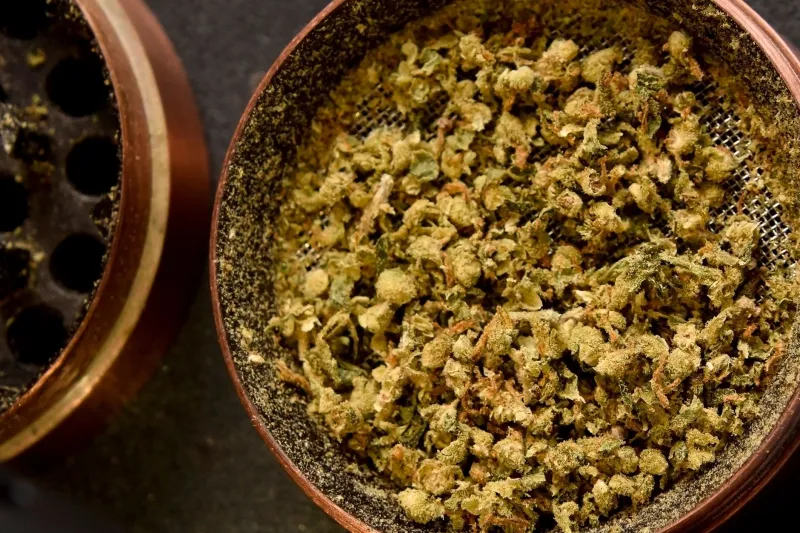
Your vaporizer doesn't create the entourage effect. It can only work with what's already in your cannabis. And by the time flower hits your bowl — or concentrate hits your chamber — a significant portion of its terpene content has already been affected by how it was grown, harvested, cured, stored, and packaged. A device with a perfectly calibrated convection heater cannot restore terpenes that evaporated off poorly stored bud sitting in a plastic bag for three months.
The marketing also tends to gloss over thermal degradation. Terpenes are volatile compounds. Many of them begin to break down or evaporate at temperatures well below what most people actually vape at. Myrcene, for instance, has a boiling point around 334°F, but it starts degrading before that. If you're running your vaporizer at 410°F because you want thick, visible vapor, you've likely already burned off a meaningful chunk of the terpene profile that was supposed to be doing all that synergistic work.
Temperature Matters, But Not in the Way Brands Suggest
This is where things get genuinely useful. Temperature control is important for terpene delivery — just not in the way most product descriptions frame it. The goal isn't to find the one magic number that unlocks the entourage effect. It's to understand that different compounds volatilize at different temperatures, and that lower-temperature sessions (roughly 330–360°F) tend to preserve more of the aromatic, terpene-forward character of your cannabis, while higher temperatures extract more cannabinoids but at the cost of some of that complexity.
A stepped or graduated session — starting low and working up — is one practical way to get more range out of your material. But again, this only works if the terpenes are there to begin with. Device features are downstream from cannabis quality.
What Actually Influences the Entourage Effect (If It Exists as Advertised)
If you're genuinely interested in maximizing whatever synergistic effects your cannabis has to offer, the variables that matter most are:
The cultivar and its actual chemical profile. Lab-tested flower with a documented terpene breakdown gives you real information. Marketing terms like "indica" and "sativa" are largely meaningless from a chemical standpoint — the terpene and cannabinoid profile is what matters.
Freshness and storage. Terpenes degrade over time, especially with heat, light, and air exposure. Airtight, opaque, room-temperature storage makes a real difference. A UV-resistant glass jar beats a plastic bag every single time.
Concentrate type. Live resin and live rosin are processed from fresh-frozen plant material specifically to preserve the terpene profile. If you're vaping concentrates and care about the full-spectrum argument, these are the products most likely to deliver something close to the original plant chemistry — assuming your device runs cool enough to handle them properly.
Your own endocannabinoid system. This one gets overlooked constantly. How cannabinoids and terpenes interact in your body depends on your individual biology, your tolerance, your mood, your metabolism, and a dozen other factors. Two people vaping the same material on the same device at the same temperature can have meaningfully different experiences.
The Vaporizer's Actual Job
None of this means your vaporizer doesn't matter. It absolutely does. A well-designed device with genuine temperature precision, quality airflow, and inert materials (no off-gassing plastics near the heat path, please) gives you the best possible shot at extracting what's actually in your cannabis without introducing combustion byproducts or unwanted chemical interactions. That's a real and meaningful advantage.
But it's an enabling advantage, not a transformative one. Think of it like a good turntable. A quality turntable lets you hear what's actually on a vinyl record — the nuance, the warmth, the dynamics. But it can't add music that wasn't recorded in the first place. Your vaporizer is the turntable. The cannabis is the record.
Be a Skeptical Consumer
The next time you see a vaporizer marketed around entourage effect optimization or full-spectrum cannabinoid delivery, ask some questions. What temperature range does the device actually operate in, and how does that interact with terpene volatility? What materials are in the vapor path? Does the brand cite any peer-reviewed research, or just the concept of the entourage effect as a vague credibility signal?
The entourage effect is a genuinely fascinating area of cannabis science, and the research is slowly getting more rigorous. But right now, it's also one of the most aggressively overhyped concepts in the industry — and vaporizer marketing is one of the biggest culprits. Understanding the limits of what your device can do is, paradoxically, how you get the most out of it.